
Webdini
A non-destructive node-based procedural DCC inspired by SideFX Houdini.
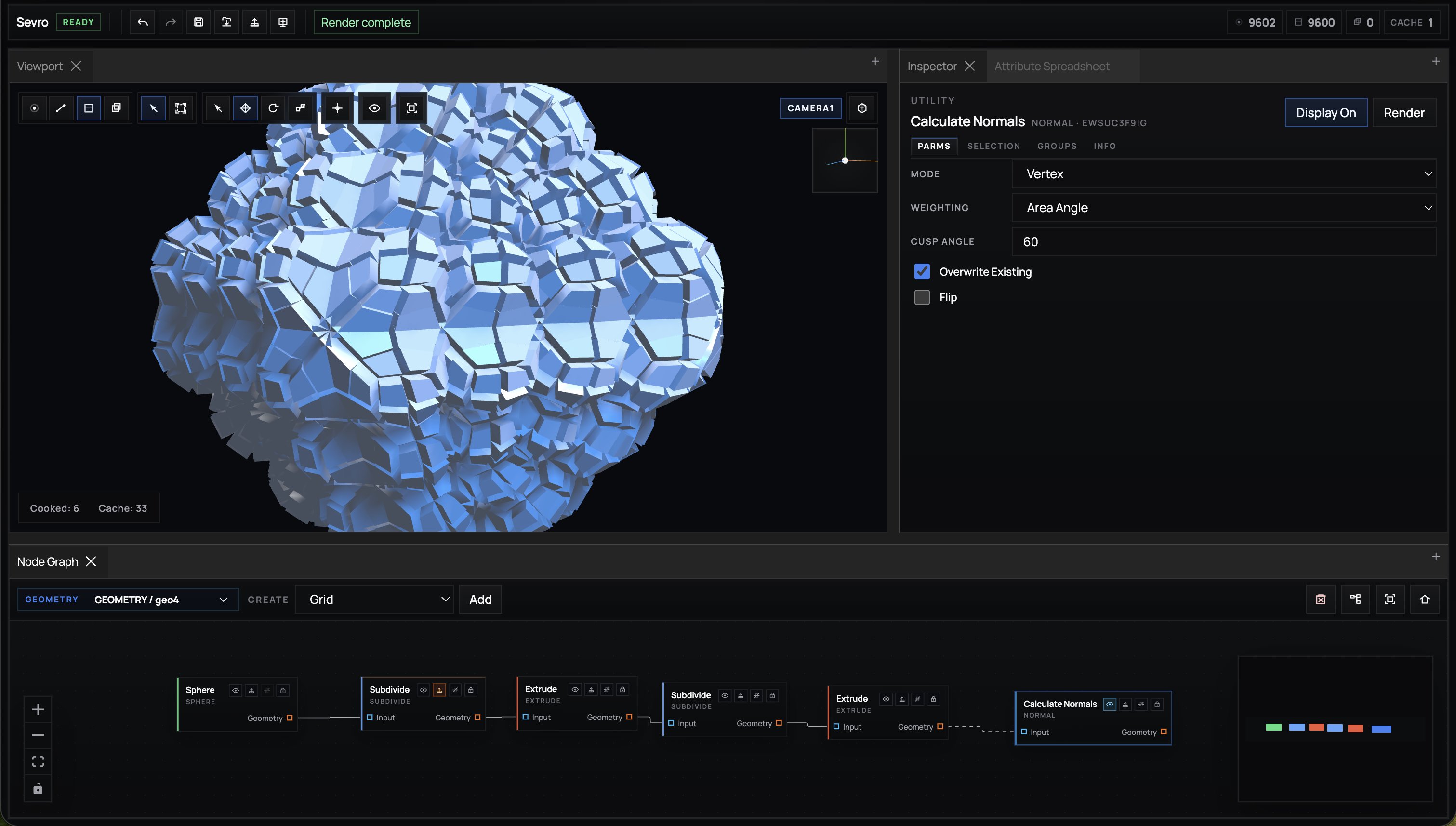
Webdini began with a slightly unreasonable question: how much of a procedural 3D application can live in a web browser?
I use SideFX Houdini for a lot of my 3D work and I love its non-destructive way of thinking. You do not model an object by making a long series of permanent edits. You build a description of the object, one operation at a time, then go back and change any part of that description later. The node graph is not an extra view of the work. It is the work.
I wanted to see how much of that feeling I could reproduce with Three.js, React and a collection of open source browser tools. Webdini was never an attempt to replace Houdini. It was a way to pull apart the ideas that make procedural modelling useful and rebuild them somewhere much smaller.
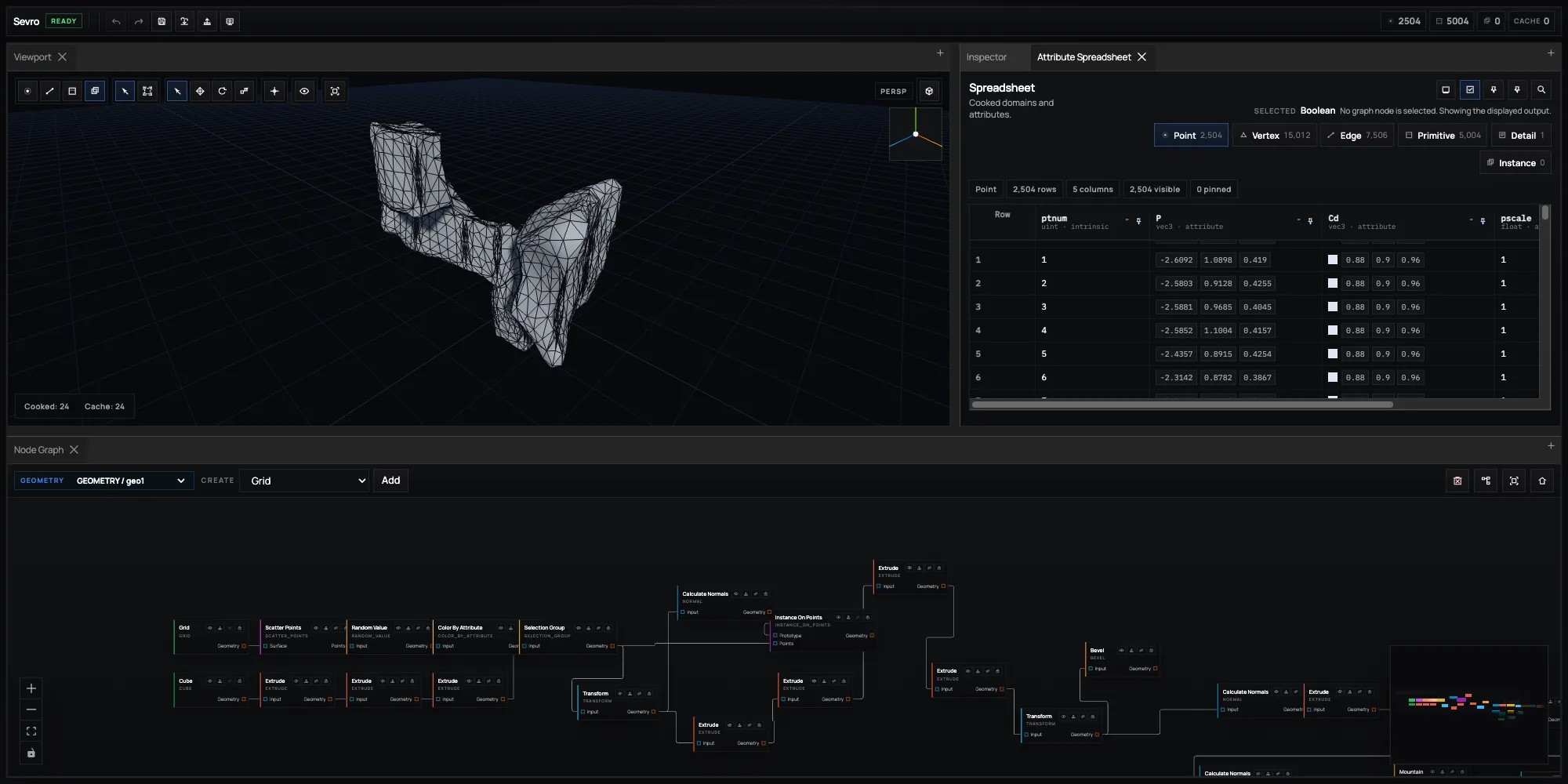
A DCC made from web parts
The browser is now capable of supporting a surprisingly serious graphics application. Webdini used Three.js for the viewport, React Flow for the graph, Dockview for the interface, Zustand for shared state, and browser versions of tools for BVH acceleration, UV unwrapping and path tracing.
Putting those pieces together taught me more than using an existing desktop framework would have. Geometry operations, selection, history, scene state and interface state all need to agree about what the current object actually is. A node graph makes every weak boundary in that system obvious.
Late in the project I also embedded an agent and a small API into the modeller. The agent could operate the same procedural tools as a person and build geometry from a prompt. Its first log cabin was not exactly production ready, but it was much better than I expected. More importantly, the result was still a graph. It produced something that could be inspected and changed rather than a mysterious finished mesh.
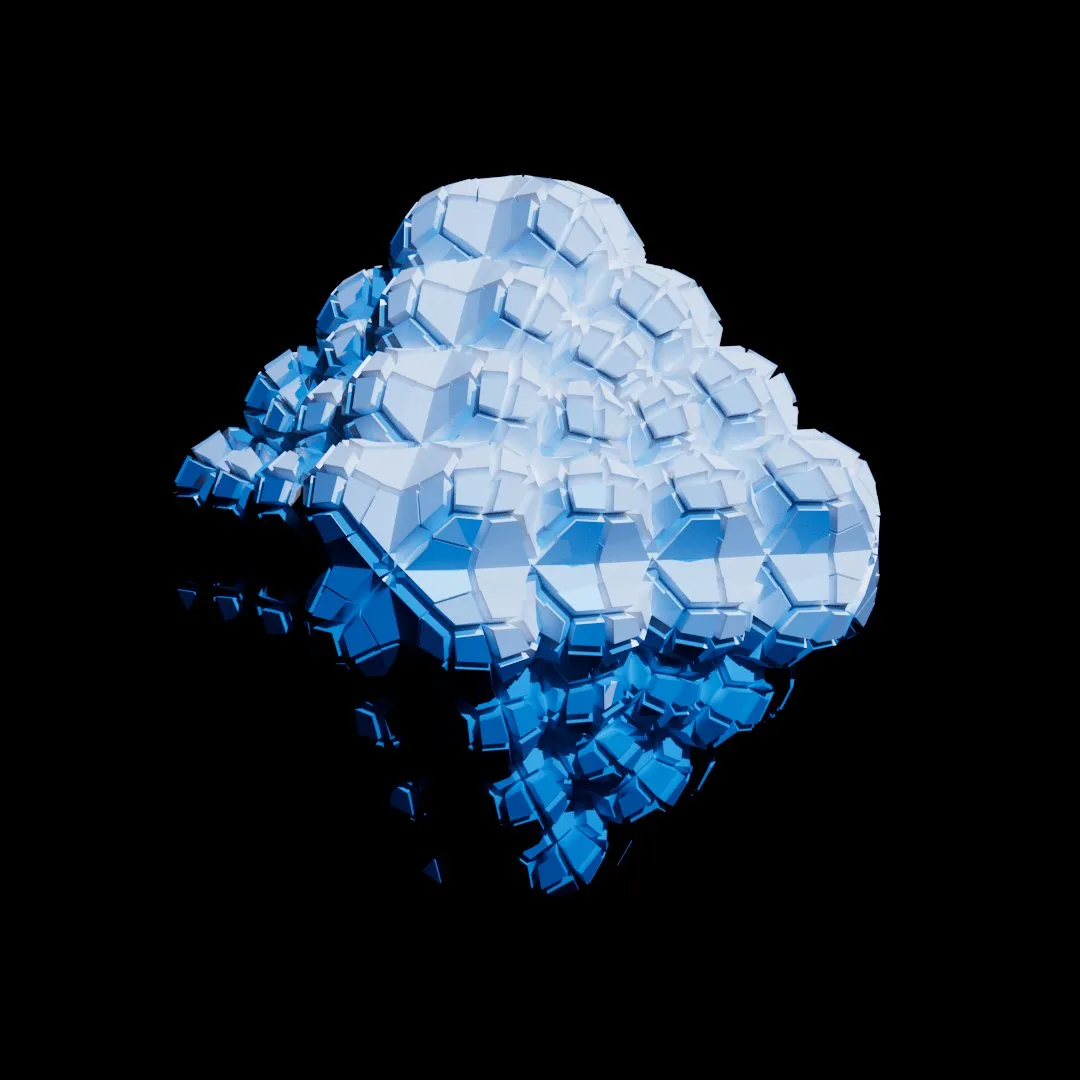
The final public experiment added path-traced rendering. By then Webdini had travelled from a basic browser viewport to a small procedural modelling environment with direct editing, an agent interface and a renderer.
I wrapped up the project on 19 May 2026. I do not think Webdini needs to become a complete commercial DCC to have been worthwhile. It gave me a place to understand procedural modelling from first principles, and it reinforced an idea I keep returning to: complex creative systems become much more approachable when their rules stay visible.
Open Webdini or see the final public update.